Designing for Charities
By Emma BoulteR
Senior Designer

How to stand out in a crowded non-profit space
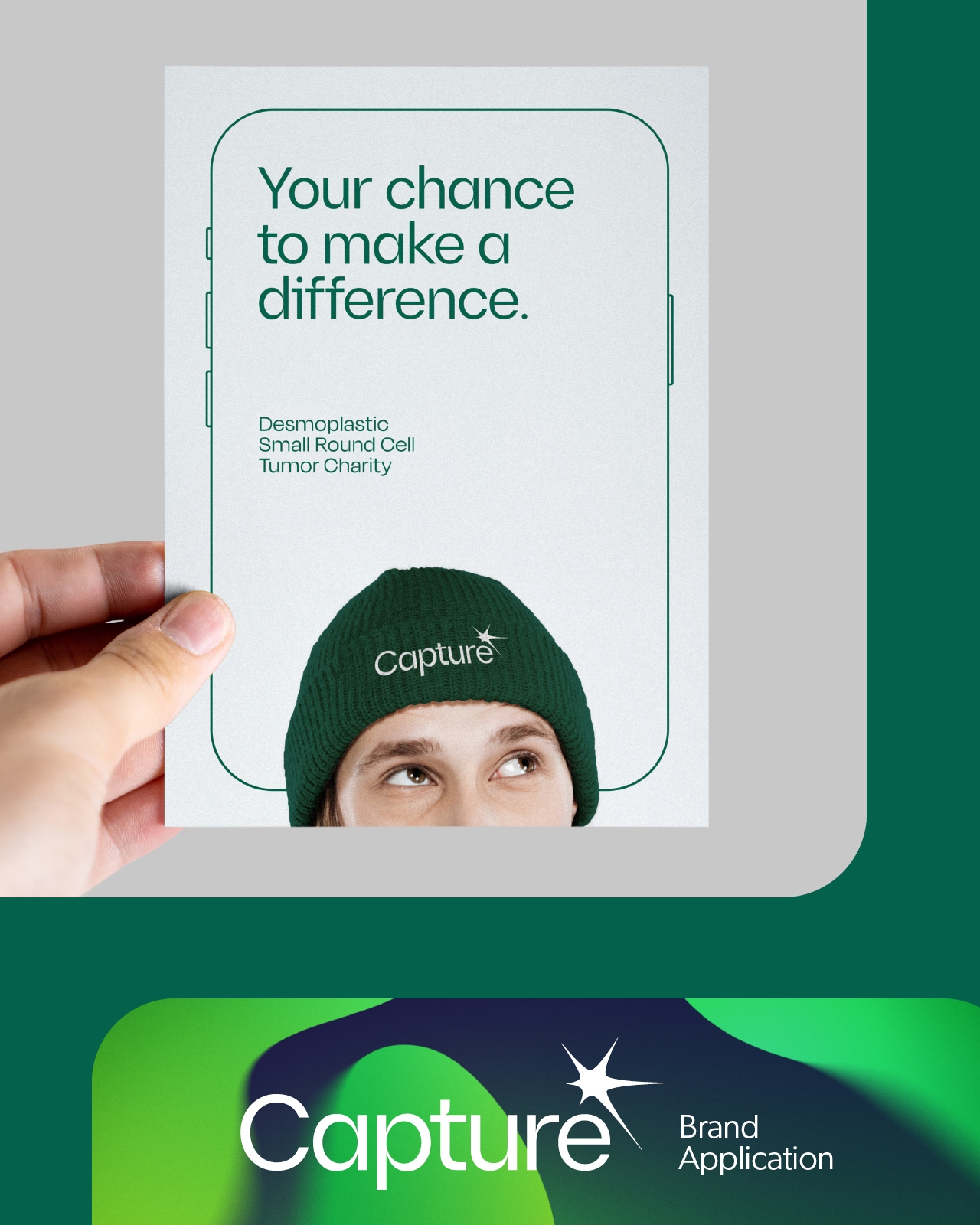
Designing for a charity is an incredibly humbling and rewarding process. It offers an opportunity to use our creative skills in service of genuine social impact, and since the Capture brand launch we’ve been reflecting on what it takes to create a successful non-profit brand.
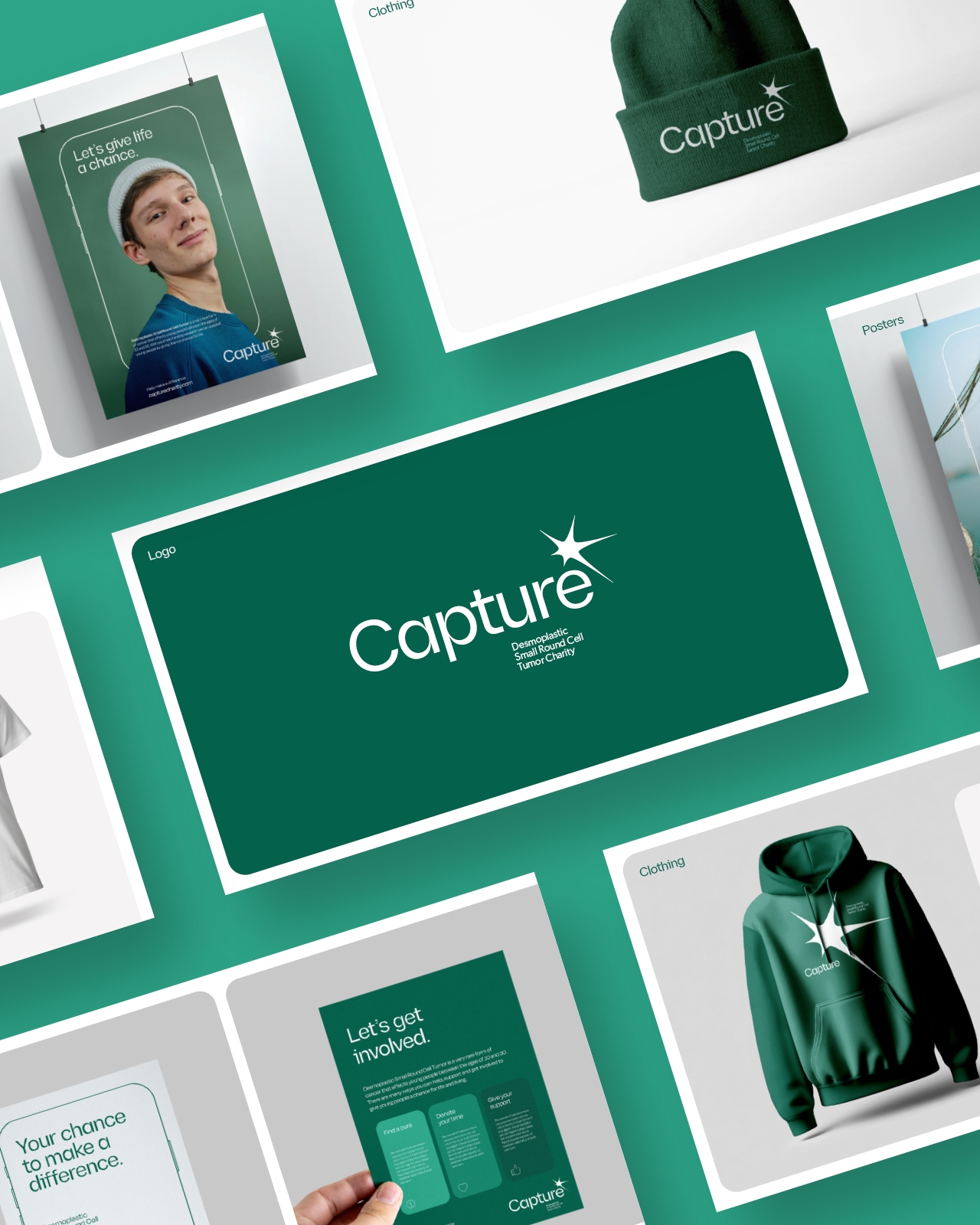
The world of charity fundraising is constantly evolving and charitable organisations continue to face increasing competition, making it even harder to stand out from the crowd. The stakes in non-profit design are also higher because resources are typically scarce while the mission is deeply meaningful. Every penny spent on design must demonstrably advance the organisation’s ability to serve its beneficiaries, which makes thoughtful design more challenging, but even more crucial to a charity’s success.
Last year we had the honour of creating a new brand identity for Capture; an amazing UK-based charity focusing on raising awareness, supporting families and funding vital research into Desmoplastic Small Round Cell Tumour (DSRCT) – a rare and aggressive form of cancer.
The charity sector is a busy space full of amazing organisations. Creating a strong and engaging brand identity is crucial to ensuring an organisation stands out from the crowd and builds trust with its supporters. The brand identity must also have clear consistency across all assets, communications and platforms to help build credibility, recognition and memorability with its audience.
A brand should always reflect the genuine character of the organisation. Supporters and beneficiaries can sense authenticity and it helps to build the trust and connection that’s essential for charitable work. Always let the charity’s true personality and values drive aesthetic choices rather than following the conventions of non-profit design.
Accessibility is paramount in charitable design because non-profit organisations often serve vulnerable populations, including people with disabilities, limited literacy or visual impairments, older adults, or people for whom English isn’t their first language. Strong colour contrast, clear, legible typography, simple navigation and straightforward language aren’t just nice features – they’re essential for ensuring a charity’s services reach the people who need them most.
Frame the messaging around the amazing change the charity creates rather than focusing primarily on challenges or problems it’s faced with. While acknowledging challenges is important, centring the narrative on solutions and success stories will empower both supporters and beneficiaries, and attract people who want to be part of meaningful change.
People connect emotionally with narratives about transformation and community impact. Don’t fall into the trap of simply listing a charity’s services in a standard format. Instead, use the brand’s voice to weave together individual stories, community outcomes and organisational values into compelling storytelling that helps people understand both what the charity does and why it matters.
We know that brand and marketing budgets in charitable organisations are often limited, meaning more innovative solutions are required to ensure return on investment. While there will always be a need for printed communications, adopting a digital-first approach to marketing is a cost-effective and savvy way to save on hefty print and production costs. An engaging, user-friendly website with clear navigation and call to action will serve as a central hub to tell the charity’s story, recruit volunteers and drive donations. Utilising digital media such as video and animation can enhance the impact of storytelling and solidify a digital presence. Whether it’s through fundraising content videos or animated infographics, these digital assets can be seamlessly shared across a charity’s website and social media platforms to reach wider audiences and new demographics.